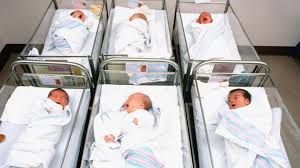
I could spend all day wondering what kind of mother I would have been to one child or ten children. I am sure the answer would be I would be a different kind of mother based on the number of children I chose to have. I might have had more patience or less patience who knows but I would have loved them all the best I could and fully.
You see some people with various numbers of children feel they have fulfilled their duty of having every child God wanted them to have without doing anything to hamper the process. And you have people at this moment trying to encourage women to have children by using laws.
I believe everyone is familiar with the Duggars who have welcomed every child into their home as a gift and share love in amounts one would not believe possible with little effort. Some judge the Duggars as foolish or as upstanding examples of living out their faith. I think they should be viewed as their children and family view them - loved.
Michelle Duggar wants her stillborn baby, Jubilee, to know "You were not loved any less because you were baby number 21.” Duggar shares her message of love for the “precious baby girl” she miscarried in an “audio letter” posted on the Duggar family website. When asked how many children she has, "The answer will be 21. Nineteen here, and two in Heaven,” she says in the message. In her message, Duggar says the name Jubilee Shalom means “joyful celebration of peace” and that the baby will serve as a reminder of the fragility of life and the importance of family.
I have an opinion about the number of children Mrs. Duggar has decided to have, but my opinion does not matter. It adds nothing to their family nor takes anything away from their family. My little opinion is irrelevant to their lives and happiness, and I am so happy it is so. Who am I to insert myself into their lives in word or deed?
The world's record for the youngest mother belongs to Lina Medina who was not yet six years old when she gave birth to her son Gerardo.
The family of Lina Medina believed that she had a tumor when they first took her to see doctors, that tumor turned out to be a healthy six-pound baby boy she named Gerardo. Lina was born in Paurange, Peru and gave birth to her son at the age of 5 years, 7 months, and 21 days old. After the baby was delivered Lina Medina returned home with Gerardo, now being raised as her younger brother. She showed little interest in the baby though, preferring dolls to playing with her son.
Puzzled doctors continued to study Lina Medina to find out how this could have happened. It was eventually discovered that she suffered from a hormone condition known as "Precocious Puberty" that caused extremely early development. She began menstruating regularly at the age of 8 months (some sources state 3 years).
For a time, Lina's own father was held on a suspected charge of incest, until blood tests ruled him out. When questioned about the father's identity, Lina was unable to give clear answers due to her young age, so nobody was ever charged. The identity of the father was never discovered. Lina Medina is still alive today and went on to live a relatively normal life. She still refuses to do media interviews. Her son Gerardo was killed in a motorcycle accident as a young adult
Mrs. Rajo Devi gave birth to a healthy baby girl in 2008 at the ripe young age of 70 years old. She and her husband have named the child Naveen. The Indian couple had tried for many years to have a child, finally resorting to in-vitro fertilization. The mothers real age is at question as many in rural India do not have birth certificates, she believes she is 70, but her husband believes that she is 72. She is believed to be the oldest mother ever to give birth, but this cannot be confirmed.
Michelle Duggar wants her stillborn baby, Jubilee, to know "You were not loved any less because you were baby number 21.” Duggar shares her message of love for the “precious baby girl” she miscarried in an “audio letter” posted on the Duggar family website. When asked how many children she has, "The answer will be 21. Nineteen here, and two in Heaven,” she says in the message. In her message, Duggar says the name Jubilee Shalom means “joyful celebration of peace” and that the baby will serve as a reminder of the fragility of life and the importance of family.
I have an opinion about the number of children Mrs. Duggar has decided to have, but my opinion does not matter. It adds nothing to their family nor takes anything away from their family. My little opinion is irrelevant to their lives and happiness, and I am so happy it is so. Who am I to insert myself into their lives in word or deed?
And now we come to 'man' trying to tell women how many children to have and not have. SHOCKER ALERT every person on earth is not a Christian and why are you trying to force them to live Christian lives when Jesus never forced anyone to be a Christian. I think Judas would have been the first-person Jesus would have forced to do the moral and ethical thing according to his religious beliefs. But that did not happen, did it?
So, what is going on? The big joke going around is that even the pope cannot get his followers to follow their faith's rules against contraceptives, because they (Catholics) have more cars than children. But I also see many people who have been fruitful and multiplied and are still in the single digit numbers 5-7, which by the way, seems to be the ideal number and then - BOOM - no more children. As Mrs. Duggar has demonstrated, fertility has a long window for double digit pregnancies and births. So, is single digit number of children meeting the being fruitful threshold?
So, what is going on? The big joke going around is that even the pope cannot get his followers to follow their faith's rules against contraceptives, because they (Catholics) have more cars than children. But I also see many people who have been fruitful and multiplied and are still in the single digit numbers 5-7, which by the way, seems to be the ideal number and then - BOOM - no more children. As Mrs. Duggar has demonstrated, fertility has a long window for double digit pregnancies and births. So, is single digit number of children meeting the being fruitful threshold?
The number of Christians having Christian babies should be higher and then the number of Christians in America would be very high and this need to step in with laws banning contraceptives would not be occurring. But reality will always rear its ugly head. Someone is not practicing what they are preaching or legislating.
HOW DO WE GET CONTROL OF THE UTERUS? Possession is 9/10th of the law people or so I have heard. I have never actually read a law that says such. But decisions are being made about the number of children a family is going to have. So, with my three children should I look down on the person with one child, 21 children, or no children? Or should I let others live and answer for their own choices in regard to the size of their family?
HOW DO WE GET CONTROL OF THE UTERUS? Possession is 9/10th of the law people or so I have heard. I have never actually read a law that says such. But decisions are being made about the number of children a family is going to have. So, with my three children should I look down on the person with one child, 21 children, or no children? Or should I let others live and answer for their own choices in regard to the size of their family?
Do you believe the pope would issue out punishment, if he could, for the estimated 98% of Catholic women who admit to using some sort of birth control at some point in their lives? If this is a religious commandment; why isn't the church handling it for the Christian people who have agreed to adhere to the tenants of their faith. This is for all Protestant faiths also.
Here are a few facts I found interesting from another site I thought you might find interesting
http://www.squidoo.com/strange-parenting-facts
Historians believe that Mulai Ismail, second ruler of the Moroccan Alaouite dynasty, may have sired an estimated 888 children through 500 wives. In order to attain that number of children, he would have had to copulate with an average of 1.2 women per day over 60 years. That is one busy man!
Speaking of fathers, I have always thought it strange that the world's record for the most children born to one woman was not listed under the woman's name, but her husbands. According to records the first wife of Russian peasant Feodor Vassilyev who died in 1782 gave birth to an astounding 69 children.
In the day of 27 February 1782, the list from Nikolskiy monastery came to Moscow containing the information that a peasant of the Shuya district, Feodor Vassilyev married twice and had 87 children. His first wife in 27 confinements gave birth to all of these children. Between 1725 and 1765 she gave birth to 16 sets of twins, 7 sets of triplets, and 4 sets of quadruplets! She was pregnant a total of 27 times, and 67 of those children survived infancy. Yet no record of the wife was ever kept, her name, date of birth and dates of death are not included in any of the record books. He went on to remarry and eventually sired another 20 children for a total of 87 children. Cause of his firsts wife's death was presumably exhaustion if you ask me.
Here are a few facts I found interesting from another site I thought you might find interesting
http://www.squidoo.com/strange-parenting-facts
Historians believe that Mulai Ismail, second ruler of the Moroccan Alaouite dynasty, may have sired an estimated 888 children through 500 wives. In order to attain that number of children, he would have had to copulate with an average of 1.2 women per day over 60 years. That is one busy man!
Speaking of fathers, I have always thought it strange that the world's record for the most children born to one woman was not listed under the woman's name, but her husbands. According to records the first wife of Russian peasant Feodor Vassilyev who died in 1782 gave birth to an astounding 69 children.
In the day of 27 February 1782, the list from Nikolskiy monastery came to Moscow containing the information that a peasant of the Shuya district, Feodor Vassilyev married twice and had 87 children. His first wife in 27 confinements gave birth to all of these children. Between 1725 and 1765 she gave birth to 16 sets of twins, 7 sets of triplets, and 4 sets of quadruplets! She was pregnant a total of 27 times, and 67 of those children survived infancy. Yet no record of the wife was ever kept, her name, date of birth and dates of death are not included in any of the record books. He went on to remarry and eventually sired another 20 children for a total of 87 children. Cause of his firsts wife's death was presumably exhaustion if you ask me.
The world's record for the youngest mother belongs to Lina Medina who was not yet six years old when she gave birth to her son Gerardo.
The family of Lina Medina believed that she had a tumor when they first took her to see doctors, that tumor turned out to be a healthy six-pound baby boy she named Gerardo. Lina was born in Paurange, Peru and gave birth to her son at the age of 5 years, 7 months, and 21 days old. After the baby was delivered Lina Medina returned home with Gerardo, now being raised as her younger brother. She showed little interest in the baby though, preferring dolls to playing with her son.
Puzzled doctors continued to study Lina Medina to find out how this could have happened. It was eventually discovered that she suffered from a hormone condition known as "Precocious Puberty" that caused extremely early development. She began menstruating regularly at the age of 8 months (some sources state 3 years).
For a time, Lina's own father was held on a suspected charge of incest, until blood tests ruled him out. When questioned about the father's identity, Lina was unable to give clear answers due to her young age, so nobody was ever charged. The identity of the father was never discovered. Lina Medina is still alive today and went on to live a relatively normal life. She still refuses to do media interviews. Her son Gerardo was killed in a motorcycle accident as a young adult
Mrs. Rajo Devi gave birth to a healthy baby girl in 2008 at the ripe young age of 70 years old. She and her husband have named the child Naveen. The Indian couple had tried for many years to have a child, finally resorting to in-vitro fertilization. The mothers real age is at question as many in rural India do not have birth certificates, she believes she is 70, but her husband believes that she is 72. She is believed to be the oldest mother ever to give birth, but this cannot be confirmed.
Women, as the carrier and deliverer of children should have a say, if not the only say, on how they want their body to operate or not operate. Having children takes a toll on the body and causes lasting changes. There is a small percentage of marriages adhering to the Christian mandate to be fruitful and multiply. Advances in science has given women many tools to use when making health choices and decisions. Access to medical treatments should not be restricted for women. Men do not have medical therapies and treatments restricted for them. If the childbearing issue (even contraception availability to women) is a big priority and regulated through laws of medical availability and usage, then condoms and Viagra medication and treatment should be regulated for being connected with childbearing. There should be interference on the men's side also and dictate their ability to reproduce or not reproduce.
DON'T FORGET: buy my book When Will Eve Be Forgiven? on amazon.com and click right on page to follow me for my latest posts.