Showing posts with label Dreadlock talk. Show all posts

Monday, November 24, 2014

binnixie-thinks and Comments on White People Wearing Dreadlocks

Thank you for giving me permission for using your commentary in my #DreadlockProject.

White People Dreads!

Quick thought about white people with dread locks:
I think it’s culturally ignorant and insensitive for a white person to deliberately lock their hair. It’s like when Lana Del Rey wore that head dress… It’s called “Cultural Appropriation”. It truly is just plain offensive. Also, the argument that the Nordic tribes had dread locks is complete bullshit. The vikings were incredibly clean people in nearly every way. Very efficient. So efficient, in fact, that they made hair combs out of wood. Hair combs to brush their hair out. To keep it from getting matted. They even cut and bleached their hair.
I’m not saying that black people are gross for locking their hair, I’m just pointing out that dread locks was never part of any “white person” culture. Unless of course you count hipster assholes as a “culture”.
With that being said, I think it’s inappropriate for a black person to wear dread locks just because they like the style of it. That’s still cultural appropriation. It has nothing to do with the color of your skin. It has everything to do with your religion, family,  way of life…culture. It’s also racist to tell a white person that they can’t wear dreads just because they’re white and that only black people should be allowed to wear them.
The only two ways someone could get away with dread locks without being culturally insensitive is:
1) They’re doing it out of appreciation of that culture or want to become part of that culture (Which most likely could not include women, I think)
2)They’re just being lazy. They don’t want to go through the hassle of brushing, cleaning or even cutting their hair so they just let it get matted until it looks like dreads. And that’s just nasty.
TL;DR: If you’re dreading your hair because you think it looks cool, you’re an asshole.

Saturday, November 22, 2014

Classic Tips flarktik

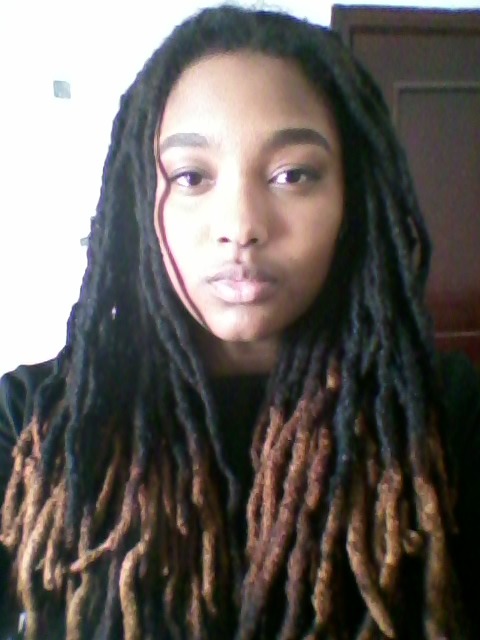
Thank you so much for sharing your beautiful picture with the project. I chose this picture to pursue because of the tips being colored. Many young people have tried to get me to dye my tips and I want to do it so bad, but then I feel it is not quite my expression at this time in my life. But, don't ever get me wrong, tips look good and they especially look good on you.

Friday, November 21, 2014

You A Lye

If I came up to your child and threw lye on them you would whip my ass. So why are you perming your baby's hair? You begin the barrage of negativity telling our daughters they are too dark, too nappy, almost from birth and then wonder why they date men who disrespect them. Their first love disrespected them telling them overtly they will never be pretty enough. I don't hate women who perm their hair nor judge them harshly. I just wonder why we embrace what we were not all meant to have - light skinned and straight haired, because it is not in our DNA.
Feminism says I have choices. As women, why do we choose, as black women to be as close to white as possible? There is not one thing wrong with being white if you are white, but then we get mad if our black men prefer an original instead of a copy.
When we decide to stop trying to have it both ways, (I'm a black woman and have white women features) maybe we will love our sisters and stop being in competition from adolescence with them. Maybe we will embrace each other and stop with the purchase of cast off hair from women who know you wish you were more like them and less like yourself.

People speak of the "angry black woman," maybe it's all of the chemicals she puts on her scalp so close to her brain that is causing so much emotional turmoil. Maybe it's the tension and constant itching from the sew in that is causing easy irritability. Maybe it's the stress of constantly purchasing and having on hand/head the right hair to attract the wrong man in the end. Who knows why she is considered angry, but maintaining the image of being black but not too black every day may way on the spirit.

With all of the hurdles we as women face each day of our lives - the "Right" kind of hair should be low on our lists of things to accomplish.

I will not add to the exhausting frustration by trying to guilt or shame my sisters with long, straight, flowing down to your ass hair. I just say I see your beauty in all it's shape and form beyond the hair you wear. My greatest wish is for you to love yourself with or without all of the bells and whistles. But my soul sings when I see baby girl rocking her nappy hair, because that smile of innocence and discovery all baby's have do not shine any less with their natural hair.

Accepting your child as is - is the first step for the world accepting your child as is. We tell our children they can be anything they want to be in life. Do we tell them that included in being anything they want to be when they grow up consist of being natural and nappy and happy.

The hair dialogue and experience is changing. My moment of hair pride was jump started with our First Lady Michele Obama. It was refreshing to see her young girls nappy and happy. As I said we are free to choose and the girls straightened their hair like their mother straightened her hair, but for a while, nappy was just fine. I am not above the straight hair game. I straightened my hair for years and my daughters hair too. i was free to do so. But, later in life I mad e a choice a change and so did they. No self righteousness now from me. But, my journey in life just took another hair path. And now i just sit with the question; "Why not my natural hair?" What else am I revamping for our social construct of what is correct, beautiful, sought after?"

Thursday, November 20, 2014

Model Long Locs

I swear I’m a model at times .. but I’m not though. You are a model loc wearer to me jaloysius: Thank you for sharing your picture for my #DreadlockProject


Wednesday, November 19, 2014

WHITE GUY RANT REGARDING WHITE PEOPLE WEARING DREADLOCKS GONE WRONG

This post absolutely shows white people do not have a clue when they are being racist and offensive. See if you can see what I mean about a white guy being clueless.

                                              
                                 White people need to stop trying to have Black hairstyles.  
                                          by: idontalwaysblogbutwhenidoiuse.tumblr.com

                                             
Seriously, this is one of the things that pisses me off most in the world. If you’re white and you’re thinking of getting cornrows or microbraids or dreadlocks, STOP NOW. Your hair is just plain not suited for it! White people’s hair is fine and holds a lot of moisture. If white people get dreads, their hair molds! And that can cause serious scalp infections! And if white people get their hair braided, it can cause their hair to fall out. Literally, it is just not healthy for your hair.

But besides that—IT’S NOT FUCKING COOL. Like, if a black person wants to do their hair these ways, they will be branded a “thug” or otherwise judged as a dangerous person because of racialized and reified (if you don’t know what reified means, look it up) stereotypes. And so you want to get a hairstyle that is NOT EVEN SUITED TO YOUR HAIR TYPE, while a person whose hair is actually suitable cannot get that hairstyle without being judged, you’re completely ignoring your privilege.
Like wtf. It’s not as simple as, “I thought it was cool so I did it,” because the cold hard truth is that if that’s all you thought about, then you’re admitting that you didn’t bother to think about a) whether your hair was right for it, b) whether you would be treated differently because of your hair and c) how your race affects the way that your hair is received/viewed by others. You have the privilege of not having to think about your race, you have the privilege of not having to worry that you will jeopardize your job by making this (bad) decision.

Black people’s hair is coarse and well suited for dreads or braids and these styles are viewed as signs of a thug or a dangerous body because in our society we have invented and reinforced the idea that black people are dangerous and violent. Black people are often forced to make their hair look more “acceptable” to white people and are often criticized for natural looks. And when you decide to take on those hairstyles—even thought they are wrong for you—you’re ignoring their struggle and being an asshole.

Basically—stop trying to take something that doesn’t belong to you. Stop deciding that race doesn’t matter. Think about shit before you do it and stop insisting that being a white person with dreads or braids is not racist. It is and you look like an idiot.

**If I read this correctly, the writer was admonishing white people for throwing their white privihttp://dreadlockpicturesneededforbook.blogspot.com/ledge away by wearing a hairstyle that makes them a thug. Was that what you gleaned from this post and how he tried to say it was offensive to blacks for white people to wear the hairstyles because they were appropriating their thug status??? REALLY???? Get a bleeping clue. You should be angry about your false sense of wisdom and total lack of ability to speak on behalf of a black race/culture. Stay in your lane PLEASE. Face the fact that your race is leaving the herd going after all things black; which is truly what your rant is about.

A BIG THANK YOU

I just wanted to take a moment to thank everyone who has participated and supported my Dreadlock Project. I have been working on it for a couple of years now and the project is getting better and better because of you.

I wanted to use the everyday dreadlock wearer to show the world how awesome the hairstyle is and the people who choose to wear locs, and you are helping me to accomplish this goal.

I hope to have a representation from every state and country possible. Many of the submissions do not include the state or country you are from. When I am afforded the opportunity I do ask for the state or country to be included in the submission.

This has been a fantastic journey. I am spreading my own wings falling more and more in love with dreads and trusting my instinct in giving a voice to the royal hairstyle.

Once again I say thank you to all who have posted my submission request on your tumblr page and liked or rebloged a post of mine.

The project is always on the verge of completion and then I see a picture that blows me away and I have to ask the now infamous request: "I love your picture. Please consider giving me permission to use your picture in my Dreadlock Project " lol

Tuesday, November 18, 2014

The Face Of Fiercenes


Her tumblr name says it all gangstaturtles-makaveli.tumblr.com brave enough to switch it up on her own terms and a look on her face which lets you know there is an outer shell where negativity bounces off. She rises each day with creativity brimming over her edges waiting to be expressed. All of these words are mine to describe the lady in the picture with a mane of locs waiting to be seen and heard. Thank you for sharing your pictures with us. I love your look and expression of you.


Goddess Rockin Locs

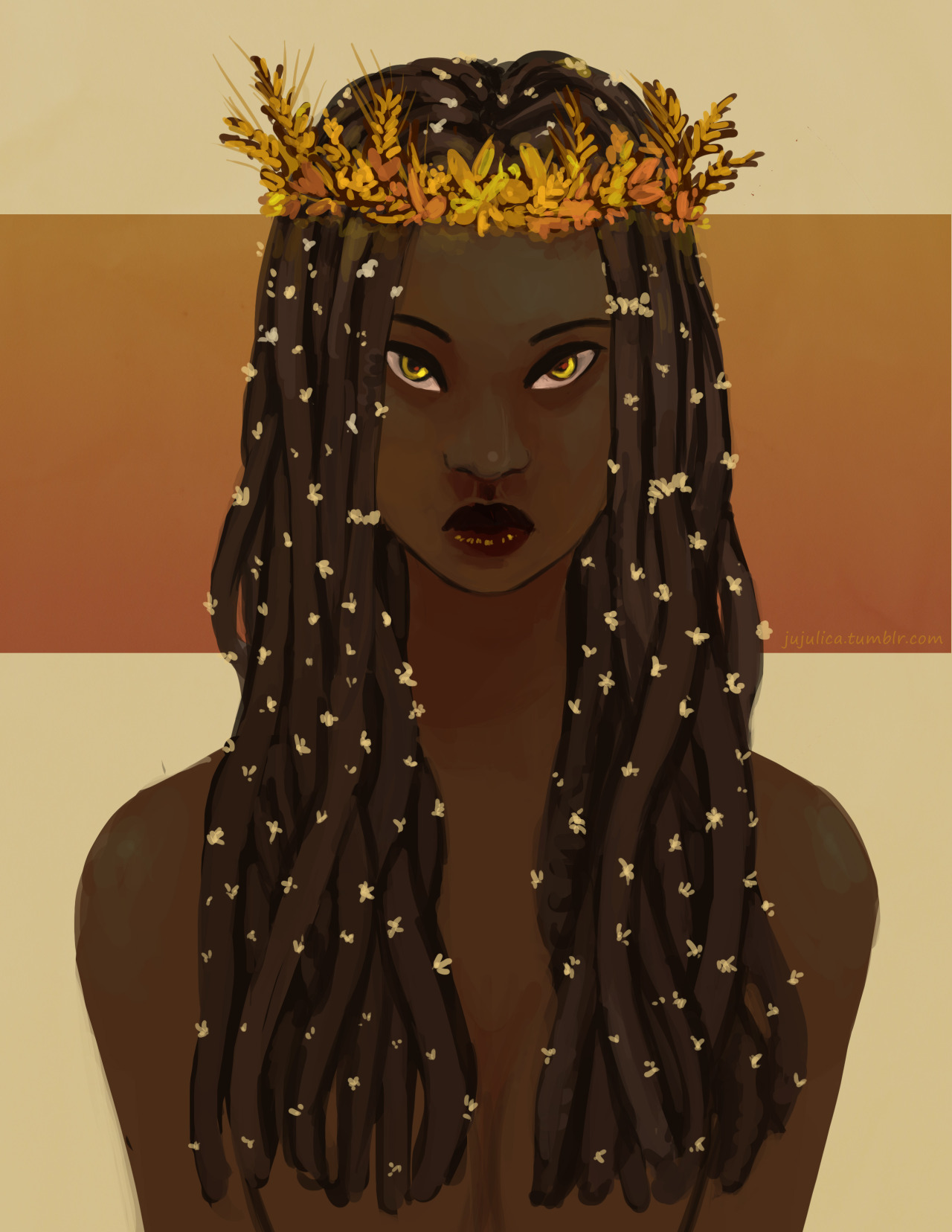
 I am a big fan of the arts and love to come across artwork that takes the time to make a connection with African roots. Many artist connect ancient folklore and put a new spin on it. It not so far fetched to believe at some point in mythology that there was a goddess who ruled while loc'd up. I am so thankful to have permission to use this piece of art work in my dreadlock project.  
A wonderful rendition of the young goddess Demeter by: jujulica.tumblr.com  
Please take a moment and support her artistic endeavors at her tumblr site

Sunday, November 16, 2014

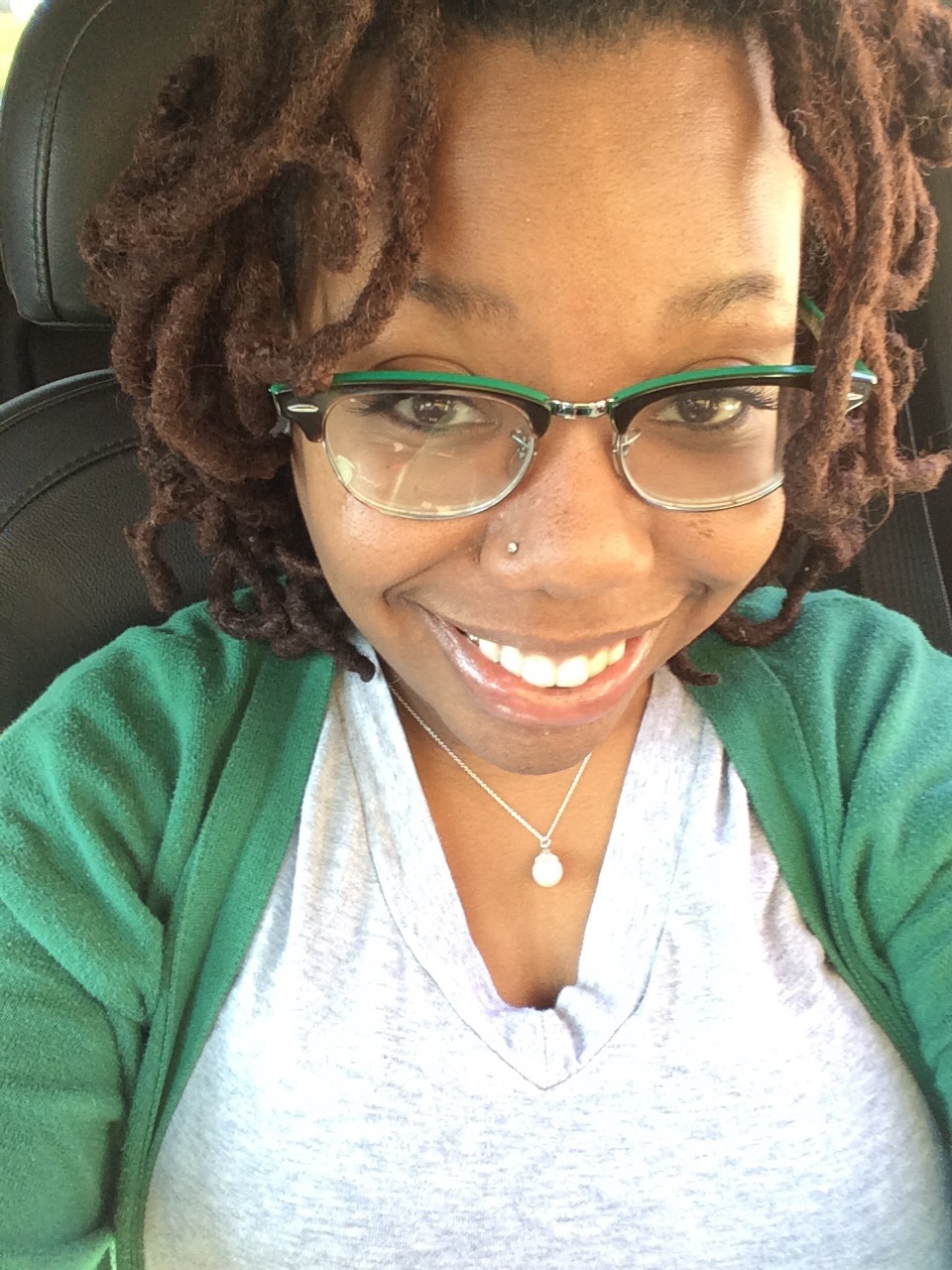
renegadegreen wears the color of envy so well

Thank you for giving me permission to use this more than contagious cheerfulness picture. Your hair is gorgeous and I love your glasses. Shares her story of finding herself.

Oh O.K. hmm, Well I'm from Silver Spring, MD and my locs are my identity. They are me, no chemicals, no filter. I use to be a chameleon with my hair looking for myself in the mirror, and since I've had locs, I like who I see. And during the stages of my hair, that's where I was sometimes mentally and physically. No, there is no 'ugly stage' but there's a 'well, this is different stage'. But we've grown, together.

Friday, September 12, 2014

YOUR NAPPY HAIR SAYS IT ALL

I have two relationships with the outside world: One is with my hair, and the other is with the rest of me. Sure, I have concerns and points of pride with my body. I like the curve of my butt but dislike my powerhouse thighs. My breasts, once considered too small, have been proclaimed perfect so often that not only am I starting to believe the hype, but also am booking my next vacation to a topless resort in Greece. But my hair. Oh, my hair.

I have reddish brown dreadlocks that fall just below shoulder length. Eventually, they will cover my aforementioned breasts, at which time I will give serious thought to nude modeling at my local art school. I like my hair—a lot. But over the last eight years my dreadlocks have conferred upon me the following roles: rebel child, Rasta mama, Nubian princess, drug dealer, unemployed artist, rock star, world-famous comedienne, and nature chick. None of which is true. It has occurred to me more than once that my hair is a whole lot more interesting than I am.

Because I am a black woman, I have always had a complicated relationship with my hair. Here's a quick primer on the politics of hair and beauty aesthetics in the black community vis-à-vis race and class in the late 20th century: "Good" hair is straight and, preferably, long. Think Naomi Campbell. Diana Ross. For that matter, think RuPaul. "Bad" hair is thick and coarse, aka "nappy," and, often, short. Think Buckwheat in The Little Rascals. Not the more recent version, but the old one in which Buckwheat looked like Don King's grandson.

Understand that these are stereotypes: broad and imprecise. Some will say that the idea of "good" hair and "bad" hair is outdated. And it is less prevalent than in the '70s when I was growing up. Sometimes I see little girls with their hair in braids and Senegalese twists sporting cute little T-shirts that say happy to be nappy and I get teary-eyed. I was born between the black power Afros of the '60s and the blue contact lenses and weaves of the '80s; in my childhood, no one seemed happy to be nappy at all.

I knew from the age of 4 that I had "bad" hair because my relatives and family friends discussed it as they might discuss a rare blood disease. "Something must be done," they would cluck sadly. "I think I know someone," an aunt would murmur, referring to a hairdresser as if she were a medical specialist. Some of my earliest memories are of Brooklyn apartments where women did hair for extra money. These makeshift beauty parlors were lively and loud, the air thick with the smell of lye from harsh relaxer, the smell of hair burning as the hot straightening comb did its job.

When did I first begin to desire hair that bounced? Was it because black Barbie wasn't, and still isn't, happy to be nappy? Was it Brenda, the redhead, my best friend in second grade? Every time she flicked her hair to the side, she seemed beyond sophistication. My hair bounced the first day back from the hairdresser's, but not much longer. "Don't sweat out that perm," my mother would call. But I found it impossible to sit still. Hairdressers despaired like cowardly lion tamers at the thought of training my kinky hair. "This is some hard hair," they would say. I knew that I was not beautiful and I blamed it on my hair.

by Veronica Chambers, from Body September-October 1999 


Wednesday, September 10, 2014

“White folk wearin’ dreadlocks irks the shit out of me.”

 
“Does anyone else get annoyed when they see white folk sportin’ dreadlocks, tribal tattoos, and stretched out earlobes with plastic circles in them? What the hell is goin’ on? It irks the shit out of me. ”
I am overhearing a conversation as I wait for my order at a café in Oakland, CA. The woman next to me is black and about 55 years old, wearing dreadlocks that are about 2 feet long with a plethora of glass beads flossed through them. She is speaking to her friend, a woman probably in her 50s as well with a shaven head and wearing yoga pants and a blue tank top. She has mocha colored skin tone and seems to be of East Asian descent.
I know what this black woman is referring to: a group of three white 30 something year olds sitting at a table about 8 feet away from the two women. Two men and one woman. They all have punk style dread lock hairdos. They have shaven the sides of their heads and there are interesting black tattoos on their scalps. They have piercings through numerous parts of their faces: a bull ring, a nose ring, a stud through the bridge of a nose.
I wanted to say something to the two ladies, but wasn’t sure what to say. After all, it wasn’t my conversation and I guess I had no business saying something… but I wanted to say something to this black woman. I had heard the conversation plenty of times, amongst black people, how it irks the shit out of them that white people try to ‘go tribal’ by locking their hair.
“Drives me nuts too,” I hear her yoga pant wearing friend say. “It reminds me of all the white people who jumped on the ‘I’m a Buddhist’ wagon in the Bay area, but don’t want to be all deep and reflective about their nauseating white elite privilege.”
Ouch. Did she just say that? And really loudly? Nauseating…. ?
Are white people not allowed to practice yoga, Buddhism, get tribal bands, or wear locs since it’s not ‘white culture’ (and what is ‘white cultures’ anyway)? If that is the case, does that mean I’m not allowed to continue with my beginner Zen Buddhism practice? After all, I’m not of East Asian descent; I’m a Black woman. Should my friend Heather, a Chicana yogi who studied in India, stop teaching yoga at a community center in NYC since she is not from India? Or, does our non-white identity make us exempt from “appropriation?”
Shortly after leaving the café, I passed by a Black heterosexual couple on the street, holding hands. The woman was wearing a punkish Mohawk style and ear plugs through her lobes. Was she appropriating by wearing that hairdo?
I had a friend, “Nicole”, who is Filipina and African-American whose take was, “Well, I think what pisses me off about dreadlock wearing white people is that they can wear our black hairstyles, listen to our black music, and be all hip but still they will always benefit from being white. They can just shave that shit off and that’s the end of the story. Yea, I used to wear dreadlocks, but I shaved it yet I still have to deal with the bullshit of what my brown skin means in a society obsessed with white European phenotypes.” But, at the same time, I wasn’t sure if I could completely agree with “Nicole.” When I first met her, she had the biggest afro I had ever seen. Two weeks later, she had it professionally locked and ended up interviewing for jobs in the finance industry and landed a phat gig at Morgan Stanley… but she also seemed to navigate through life rather well with her Dartmouth Tuck School of Business degree making six figures at some investment banking company while wearing her dreadlocks the first five years working there, and then finally cut it all off into a short afro.
…my close from “T” is a white Jewish woman who now practices Zen Buddhism for the past decade. She mentioned to me last year that she’s getting uncomfortable with a lot of what she is doing because she believes it is a form of appropriation for most of her white Buddhist fellowship to wear the robes, use the names, and do the practices of Zen Buddhism. She is deeply questioning if she is appropriating, without being mindful of what it means to be able to do something that is not associated with ‘the white race’, but not be at a ‘disadvantage’ because of her own white racial privilege trumping the non-white roots of Zen Buddhism….but I wasn’t sure if I agreed either, as her practice of Zen Buddhism over the 5 years I have known her, have made her practice a type of mindfulness towards structural racism and systemic whiteness that may not have been possible, had she not become a Zen lay nun. She seemed to understand that mindfulness should include awareness of race and white privilege. She and I have noticed the overwhelmingly whiteness of Green Gulch Zen Center and the Berkeley Zen Center that we frequent. The other month, I began reading Race and Religion in American Buddhism: White Surpremacy and Immigration Adaptation by Joseph Cheah. He quoted from bell hooks’s provocative essay “Waking up to Racism”, who reflects on how whiteness and racism operate even in Buddhist communities that are largely white:
Often white people share the assumption that simply following a spiritual path means that they [white Buddhists] have let go of racism: coming out of radical movements- civil rights, war resistance- in the sixties and seventies and going on to form Buddhist communities, they often see themselves as liberal and marginalized, proudly identifying with the oprreeseed. They are so attached to the image of themselves as nonracists that they refuse to see their own racism or the ways in which Buddhist communities may reflect racial hierarchies (hooks in Cheah 2011, 4)
According to hooks, many white Buddhists have failed to realize the extent to which African Americans feel marginalized and out of place within their religious communities. For some African Americans, choosing to belong to a Buddhist community “has been synonymous with choosing whiteness, with remaining silent about racism for fear of bringing in issues that are not really important” (Hooks in Cheah 5, 2011). Hooks contends that white supremacy operates as an invisible regime of normatily for white Buddhists of all political orientations. Furthermore, hooks mainstains that the ideology of white supremacy informas the individual interacations that determine the shape and direction of convert Buddhist communities (Cheah 5, 2011).
Leave it to bell to break it down like that…. But still, I can’t say I totally agree. Yes, I’ve encountered plenty of annoying white Buddhists who deny that their whiteness means anything and love collecting and wearing anything that looks Zen or Buddhist… but I’ve also met a lot who, like “T”, became Buddhist to become a better human being and make sure they are not being complicit to structural racism.
What is it all about? Are us people of color collectively annoyed when we see white folk doing things that we deem “non-white” because of the reasons that Nicole and hooks mentioned? Or because of what the Asian lady at the café mentioned in terms of certain white Buddhists being clueless about white privilege?
What do you out there think? I mean, I practice so many food, herbal, healing, music, etc stuff that isn’t “black” or “African”… does that drive people who nuts if I’m using their music, foods, etc? Can I use Chinese herbalism or am I offending Chinese people? Or is it okay since my great-great grandmother is actually Chinese? Not that I’m looking for permission…
Works Cited
Cheah, Joseph. Race and Religion in American Buddhism : White Supremacy and Immigrant Adaptation. New York: Oxford University Press.
**permission pending to use this article**  Posted by Dr. A. Breeze Harper in Race, Class, Gender Issues

What are some stereotypes about people with dreadlocks?

In no particular order…
Joey Flores

1. That we got our hair this way by putting eggs, honey, wax or some other product in our hair that would obviously be a disgusting mess that day, let alone years later.  Certainly some people do use products to get their dreads started, but they’re not food products that are going to go bad, and I didn’t have to use a single product in my hair.

2. That people with dreads, or dreads themselves, stink.  Dreads don’t stink.  Dreads are just hair.  They alone do not stink.  Hardcore hippies stink.  People who sleep on couches, don’t shower enough, and otherwise get their dreads dirty without washing them stink.

3. That we don’t wash our hair, or can’t.  I wash my hair.  It’s a longer process than I care to admit, and I don’t do it everyday.  I wash my hair just like anybody else, except there is a lot more wringing soap in, and wringing soap out.  The washing mostly sucks because, fully wet, my hair probably weighs 10-15 lbs.  But what really sucks is drying it.  It takes me over an hour to dry my hair and, if I don’t do it well enough, it will ultimately smell like mildew later.

4. That everyone who has dreads is, or should be, Rastafarian.  Certainly that’s one reason people grow dreads, but I grew my dreads because I hated my hair styles before, like the way dreads look, and now they’re a unique part of my identity.  Sadly, I get Rastas who think I shouldn’t have dreads.  One rode by me on a bike once and yelled, “You ain’t no fucking Rasta, man!”

5. That everyone who has dreads likes, or should like, reggae.  I like reggae, but not nearly as much as I like metalcore, funk, 80’s and 90’s rock, and psytrance.  Once on Venice Boardwalk a guy tried to sell me his reggae CD.  When I told him I wasn’t interested he barked at me: “You should cut them fucking dreads off!”

6. That we have some deadline or goal for our dreads that, when reached, will allow us to cut them off.  “When are you going to cut them?”  Truth is, I don’t know, but after 11 years they’re kind of like appendages.  I have a favorite dread, and the idea of cutting any of them is quite different than getting a few inches trimmed off of a regular hairstyle.

7. That it’s okay to tug on my hair, or feel it without my permission.  Frankly, though, I don’t mind this.  It’s a good conversation starter and most people do it kindly, not to be rude or anything.  Others might, though.

8. That we are going to remember everybody the way they remember us.  Unfortunately, remembering every guy with a standard haircut is just not going to happen, but damn near everybody who meets me remembers me, and it makes me feel terrible when they come up to me somewhere and say hello, when for the life of me I can’t remember who they are.  I know that happens to everybody sometimes, but it happens to me all the damn time.

9. That dreads are a lot of work.  I don’t find them to be so.  I get them touched up every so often by having someone crochet the loose hairs in.  Most of the hair just grows into the dreadlocks.  I think a lot of people think you have to keep twisting them constantly.  Others might, but I haven’t had to do that.

Edit: 9b!  Damn, I totally forgot this one!  That we always have weed!  And sell it!  I have people stop in cars when I’m walking down the street who ask me where to get weed.  Or, people who just assume I smoke all day every day.  People also get a weird look on their face when they offer me a hit off a joint and I don’t take them up on it, like I’m a cop or something.  No clue what’s going through their head.

10. That I’m going to save you when you are locked in some really tall tower.  Please, fool.  I barely know you!
***permission to use this article pending******

Why i love my dreadlocks….and hate those dread thieves


By Ange Ngu Thomas
 Like most people who have patiently grown their hair into locks, I was shocked when I read this story about people who ambush and steal dreadlocks from “growers”. This is happening in South Africa where the stolen locks are sold to people who don’t want to go through the long years of growing locks.

It has taken me three long years to patiently grow my locks and I must say I am proud about the way I look.

 It beggars belief that the police in South Africa can only charge the hair thieves for assault  but there is no charge for “hair theft”. The rule books have not written one.
I will be completed appalled and gutted if my dreadlocks were involuntarily shaved because it takes years and patience to grow them.

When I conceived the idea to grow deadlocks, my wife opposed it outright arguing that only “ruffians” wear dreadlocks.  My battle to grow dreadlocks started right at home with my wife, but did not end there.
Rasta picture.
My Dreadlocks
she eventually accepted my “new look”  when she saw how neat and tidy and the amount of grooming needed to grow locks.  I know a couple of people who tried to grow locks and abandoned the mission halfway because of the difficulties of getting to the end.
The fact that I still have my locks today is great. I love them more than my…(don’t want to head for the divorce court if I finish this sentence!)
As far as I am concerned, growing locks has not been difficult;  getting people to understand why someone wants to grow locks has been more challenging. There is still a lot of stigma and misconception attached to dreadlocks. A lot of people think anyone wearing locks is dirty, is a Rastafarian and loves reggae music. I am not a Rastafarian, I like reggae but not so much and I am definitely not dirty or an unruly rascal.
I must admit the fact that “hair thieves”  going the extra mile to steal locks to sell to feed a rapidly growing market is an indication of its’ rising popularity.
I used to read about people who were denied jobs or could not get married because they had dreadlocks.  Those days are gradually dying out now.
What is that on your head” a man I have never  seen before asked me on beach in Kribi,   (some 200 Km from the capital Yaounde)  - a popular holiday resort in Southern Cameroon.  “It is dreadlocks”, I retorted with a straight face.
He then asked how I managed to “plant” that on my head.  All attempts to convince him that I did nothing apart from washing my hair daily, applying an assortment of oils to it and not using a comb in three years, ended in my rasta hair do. He thought I probably was mad. I just walked away.
Bob Marley
Bob Marley
I have been stopped countless times by two categories of people; the first being those who find it sexy and the others who think dreadlocks are disgusting. While others use dreadlock to express their deep religious or spiritual convictions, others use it as a fashion statement.

I grow dreads because I am who I am; a true son of African. Dreadlocks are my signature, my way of telling the world who I really am. Love it or hate it, my dreadlocks are mine, I am responsible for them and I hate anyone who will think of stealing them off me.
Dreadlocks have a strange history. We first learn about them in ancient Egyptian history where they appeared on Egyptian artifacts.

Interestingly, the Old Testament also narrates the tale of Samson and Delilah in which a man’s potency is directly linked to “the seven locks on his head”.

In effect, modern day dreadlocks or Rasta has its origins from  Ras Tafari, the  real name of Haile Selassie Haile I, Emperor of Ethiopia from 1930-1974.  When the emperor was forced into exile during following an invasion by Italy, his supporters  swore never to cut their hair until the emperor was re-instated.

Jamaican reggae superstar Bob Marley must be the most famous dreadlocked musician on earth and he helped popularize Rastafarianism. Dreadlocked hair is the defining look of all Rastafarians.
With his dreadlocks, Bob Marley helped revive an international interest in the style, and the anti western philosophy of Rastafarian culture.

So to all those dread thieves out there, you need more than a knife and broken glasses to get my dreadlocks. I will go down fighting to keep my hair.
****permission pending*** 
Posted On 10 Mar 2013
By :

Dreadlocks vs. Corporate America: Real-Life Stories of Making the Choice Two professionals stood by their hairstyles --- with no regrets


Brian Terrell, a Morehouse College graduate, was urged to cut his dreadlocks as a student and refused. He went on to intern at the White House. (Image: Terrell)
For many African Americans with dreadlocks, the pressures of cutting your hair to fit the mold of Corporate America can be commandeering. More often than not, black professionals are encouraged to do so for greater chances of employment, where African Americans remain a small minority in the workforce. But making the choice to cut or not to cut may not always be an easy decision.
For male students with dreadlocks who enroll in Hampton University’s MBA program, which currently bans ‘locks and cornrows in the classroom, that choice could not be more perplexing. The ban, which has been set in place for 11 years, recently made headlines after the school’s dean Sid Credle defended the prohibition, arguing that the hairstyles are not businesslike and will not land students employment in Corporate America. The dean cited a 99% success rate of students who found employment after completing the program.
But for Tyler Bailey, a former student in Hampton’s MBA program, the decision to cut his ‘locks was difficult.
“It was ridiculous,” says Bailey, 23. “I thought, ‘There’s no reason I should not [be allowed in the class] because I [have dreadlocks.]‘”
Bailey set up a meeting with Credle to express his reservations with the policy, which would prevent him from completing his requirements for the program. “He told me I should cut my hair, and that I wouldn’t regret the decision,” Bailey says.
Rather than giving in to the dean’s policy, which only applies to those in the MBA program, Bailey decided to change his major to business management. A year after leaving the MBA program Bailey says he ended up cutting his hair, however, the decision was a personal one and was not influenced by the his previous experience at the university.
Brian Terrell, a graduate of Morehouse College who works at a legal and civil rights firm in Chicago said he too was faced with the dilemma of cutting his ‘locks, but ultimately decided against it.
Terrell, who locked his hair for spiritual reasons, said he was once pressured to cut his hair by a Morehouse administrator at the college’s career services office. “It’s my hair. It grows from the scalp of my head. Why does it bother you?” he recalls.
Terrell says contrary to the universal idea that dreadlocks are career killers for African Americans, his ‘locks have never prevented him from landing a job. Since graduating, Terrell has interned at the White House’s Office of Presidential Correspondence and has worked for Jen Mason, who serves as the deputy chief of staff for the Office of Personnel Management.
Terrell also argues that when it comes to Corporate America’s acceptance of ‘locks and natural hair, African Americans have to begin to speak up and set their own standard. Ultimately, he says, your job should come down to your professional assets and not what’s on your head—though he admits the only people to ever express contempt for his hair has been other African Americans. His boss, who is white, compliments him on his locs, which are often styled up. “White people are fascinated,” he says.
Bailey, who entered law school at Southern University in Louisiana, says he doesn’t regret leaving Hampton’s MBA program despite later cutting his hair. “The business school is great. I respect everything Dean Credle is doing there, but having dreadlocks does not mean that anybody is less qualified or less professional.”

Tuesday, September 9, 2014

The Dreadlocks Myth by Zuzeeuko

Dreadlocks refer to interlocked coils of hair which may form naturally or through manipulation. It is a symbol of a religious movement, notably the Rastafari movement, although an increasing number of people from different religions and cultures wear dreadlocks nowadays. Is it just another hairstyle?

Today, unfortunately, this unique hairstyle - with a long tradition of spirituality, is closely associated with defiance, guns, crime, irresponsibility, insubordination, untidiness, you name it. Even in the U.S, where there's a lot of talk about freedom and the dream of not judging people from appearances, dreadlocked folks have constantly come under attack! I was appalled when a judge in a New Orleans court ordered a teenager wearing dreadlocks to cut them. What happened to freedom? Do ideas about personal appearance cloud your judgement? Why do you think dreadlocks is constantly being associated with negative connotations? Is the dreadlocks myth a reality?

I have been wearing dreadlocks since 2003 - one year after I was admitted to study law in the University of Buea, Cameroon. Initially, people were surprised to see a law student with dreadlocks, but after sometime, it kind of became my "trademark". People described me as the "guy with dreadlocks" and I managed to literally get myself some fans and followers (I still have some today). Fortunately or unfortunately, many people became aware of the fact that it's okay to wear dreadlocks, provided you don't compromise your values and don't show up for a high-profile job interview (at least for now).

At home, I encountered some initial resistance from my mom. I remember she always told me that lawyers don't wear deadlocks. Her fear, which I understood, was that I was going to "change" and compromise the values tirelessly instilled in my siblings and I. However, she let me get away with wearing dreadlocks when she realised it was really what I wanted. It is worth mentioning that her worry was genuine, but I knew better, and never indulged in the things commonly associated with dreadlocks; I never smoked a cigarette ( not in my lifetime!), never dropped out of school, never became a criminal and neither did I negate my christian values or join the rastafari movement. As a matter of fact, I can look you in the face and reaffirm the fact that I've never confirmed any of the dreadlocks myths.

Do you know anyone whose behaviour or goals plummeted, when s/he started wearing dreadlocks? (I don't know any!)

Do you know anyone who has been profiled because s/he wears dreadlocks? (I know a few)

More importantly, have you ever regarded someone who wears dreadlocks as a "loser"? These are tough questions that should be answered in an effort to dispel the dreadlocks myth.

When I started wearing locks, I promised myself that I'd cut them after my Masters degree. As the day draws near, I can't help, but look back with nostalgia at the high and low moments of my 7-year dreadlocks experience. There were moments when, because of my dreadlocks, I was regarded as a local icon. Some friends and acquaintances called me "Icon for Town" - a slang we used at the university, to refer to a trailblazer or someone who stands out from the crowd.

Like I said, there were low moments too - when people MISTAKENLY thought I was just another uneducated, low-life criminal with dreadlocks. I always like the look on their faces when I "blow my cover", though.

Regardless, I've never regretted my decision to wear dreadlocks. I'm happy to have represented the many responsible folks out there who wear dreadlocks, and to have "busted" the dreadlocks myth.

From this day on, before you prejudge someone who wears dreadlocks, bear in mind that you might be going in for another big surprise because s/he might just be more educated, more successful, more cultured and generally a more dedicated citizen of the world, than you're! Get to know the dreadlocks carrier before you jump into hasty conclusions.

I'll leave you with the words of the legendary dreadlocked Bob Marley One Love
article written in 2010 ***pending permission from author http://www.zuzeeko.com/p/contact-zuzeeko.html

What would you do if your partner made themselves ugly?


I hate dreadlocks. I don’t think they should be banned, I don’t mean it in some racial stereotype way, I just don’t like them. Hate really isn’t too strong a word. Fair enough you may say - it’s just an opinion, nobody is about to make me have dreadlocks (although, nearly 20 years ago, I had them for about a year), so why does it matter? Because my wife wants dreadlocks. In fact, she’s getting them right now, whilst I sit at work trying not to think about it.

It feels as if I’ve gone out to work, to avoid seeing my partner violated.

I’ve struggled to make this clear to myself, and to my wife so I’m trying to frame things on the page. I don’t know if it will work any better.

I don’t need to justify hating dreadlocks. Some people hate the Mona Lisa. Some people hate the color purple. Some people really hate The Beatles. That’s ok, that’s their opinion. It’s a product of their upbringing, their culture, the books they read, the films they watch & the company they keep. It doesn’t matter what people like in the realm of the aesthetic because it’s just an opinion.

I still hate dreadlocks.

My wife didn’t have dreadlocks until today. I find her incredibly attractive. I always have. Since way, way before we were together.

I’ll always love her. I’d love her if she had no hair, if she shaved the left side of her head and painted it green, if she had a mohican (I did, for 6 months, I’ve had many foolish hair cuts).

When I get home tonight I’ll find her appearance less attractive.

When I walk in the door I’ll find her appearance uglier.

We’ve talked and argued about this back and forth for months now. When she said to me - “I’m thinking about getting dreadlocks” the comments included:
“I will find you less attractive”
“I won’t want to touch you”

Color me judged but true, every one. You, dear reader, can’t scoff and say this wouldn’t happen to you. You can’t tell me that no part of the attraction you feel for your partner is based on aesthetics. It almost certainly was a significant factor in you starting a relationship, it may be less important as that relationship matures, but it’s still there, it’s still important. It still *matters*.

There will be something, something within the realms of possibility, that could, possibly, make you feel as strongly as I do.

I also said:
“I don’t want you to change your mind on something you really want, based on my opinions. Your hair, is *your* hair. It’s nothing to do with me, I get no say in it, do what you want.”
It’s true. The conflict between the two voices is causing immense torment in my head.
What would happen if my wife felt as strongly about a proposed haircut of mine? Would I “back down” (the very phrase shows the animosity) or would I say “It upsets you so much, I won’t have it done, even though I don’t agree”.

If my wife said she wouldn’t kiss me if I grew a beard, I wouldn’t grow a beard.

I’ve been unable to rationalise her decision into my world view. I’m still angry and upset about it now, as much as I ever have been. Maybe this is a phobia of some sort, maybe that’s why I’m so anti dreadlocks.

I feel my wife has deliberately spoiled her beauty. I feel sad. I’m not sure what to do about it.
****authorization to use this commentary by author still pending*** by http://www.tetsugaku.info/blog/399

CAN MUSLIMS WEAR DREADLOCKS?

 I ran across this article on internet and wanted to share this with my audience
 A Fatwa is
  1. a ruling on a point of Islamic law given by a recognized authority.
 
Question:  
I am looking for a fatwa on women having dreadlocks. Dreadlocks can be neat and clean. They can be wet daily for wudu and lathered with shampoo for ghusl, the parts are neat so that water can reach the scalp at all times. The only difference is that each lock cannot be combed out although they can be washed like unlocked strands of hair, so in essence each lock functions as a strait of hair. I am asking what the Islamic ruling on having them is, is it okay since I can wash them with water and shampoo after my menses or janaba, and what about at the time of my janaza (funeral) they can be washed then also, even though each lock is taken out and the locks can be braided into three braids.
Answer
In a situation of Wudu there is no need to unlock the dreads and blocks of hair. All that is required is that you wipe over the hairs of the dread locks. But in the case of Ghusul (process of purifying the entire body via a bath) from Janabah and Menses, the hairs need to be done and washed so that all of the hairs are completely wet and the water reached your skull. The same goes for Ghusl of Janaza (funeral). If these conditions can be met, then having dread
 http://qahiri.wordpress.com/2012/05/20/can-muslims-wear-dreadlocks/

Profiling People With Dreadlocks Must Stop Now

       I will not beat around the bush on this post. Not too long ago white people use to look at people with locs as though they were a criminal just released from jail. Someone to be feared because of a hairstyle. No longer will the profiling of the black man or woman by their hair. Dreadlocks have gone mainstream from CE'O, professors, nurses, to every other type of profession you can think of.

            Little did I know when I began this project actually how many people would embrace dreadlocks. it has been amazing. I believe this fascination with nappy locs will continue and my #DreadlockProject will have a lasting impact also for those who wear locs and for those who don't.

             I am continually thankful to all that are participating and saying encouraging words as I try to complete my ‪#‎dreadlockproject‬ before January 2015. This I must admit is a labor of love because I love my loc wearers and ‪#‎dreadlocks‬ I am slowly but surely getting pictures from all around the world. I decided to share how many different parts of the world have participated already. I have several pictures from the same (duplicate representation) state/country; which I will still use. There are certain states I am still waiting to hear from. Come on and show your loc love.
London -                        New York -                           California
Canada -                        Georgia -                               Philadelphia
Japan -                           Oregon -                                Florida
Kenya -                         Mississippi -                          Missouri
Amsterdam -                 Louisiana -                            New Jersey
Haiti -                           Pennsylvania -                       Wyoming
Sweden -                      Washington, DC -                  Illinois
Argentina -                   Ohio
Palestine -                    Michigan
Australia -                    Maryland
Italy -                           South Carolina
Bahamas -                  Massachusetts

Monday, September 8, 2014

White People Aren't Racist For Wanting Dreads OMFG

I ran across this article and I wanted to share it because I want all points of view about dreadlocks and people who wear them. Makala Beker is the author of the article and has given me permission to use it in my dreadlock project. A big thanks to her and thank you for expressing your point of view. As you read the article please understand the importance of people freely expressing themselves which is at the core of this dreadlock project. The hairstyle as we say, is more than just a hairstyle. It carries an historical significance that can not be erased with time. In this twenty first century of awareness, the debate has hit the table over a hairstyle to some and a spiritual way of life for others.

I applaud the author's willingness to just put it out there on the table. I appreciate her freedom of expression and how it will contribute to the dialogue on why people love dreadlocks and the view on who can and cannot wear dreadlocks. Once again, a big thank you to the author.

Did u know. that human beings. are entitled to have whatever goddamn hairstyle they fucking please? Because they are!!

In no fucking way is a white person wanting dreads racist. It is a form of self expression. When people see clothes they like, they buy them. When people want a tattoo, they pay someone to have a needle with ink on it stabbed into them. When people want a hairstyle, by golly, they go and get it.

Yes, dreads have African roots historically. Fucking duh. It is also how a black person’s hair naturally ends up. Wow. I'm aware, in no way am I saying that this in unimportant. I'm saying it's stupid to say a white person cannot have a hairstyle because it has African roots. That’s like saying black people can't use a fucking light bulb because a white guy invented it. More relatively, thats like saying black people can't get weave to make their hair look naturally curly or straight or whatever the fuck because white people’s hair is naturally like that.

All u bitches tryin to say “Oh do whatever makes you happy it's your body don't let what others say.” Then a white person who has been wanting this hairstyle for a hot minute now finally gets the courage to go out and do it and you hypocritical cunts turn around like “NO! BAD! U CANT HAVE DREADS, THEY BELONG TO BLACK PEOPLE!!!!!!!!!!”

WELL BOY DO I HAVE NEWS FOR YOU. Not only is it not your fucking business what kind of hair a person has, it - is- hair. I'ts a fucking fad. Get over it. In no way is it affecting you.

ALSO DID U KNOW not everything is some fucking stupid social justice issue. I know that may come as a shock. Some of you are probably staring at your computer screen, jaw dropped and eyes bulging out of your sockets, but its true. Not everything a social justice issue. Repeat after me: NOT. EVERYTHING IS -A - SOCIAL - JUSTICE. ISSUE. A white person wanting dreads does not make them racist nor is it fucking close to a racial issue. Stop sucking the fun out of every fucking thing because you gotta nit pick to find something offensive.


Jeleine Toussaint is Feeling It

I’ve always been a fan of women playing in my hair. But with dreads it feels so much better, as if you are touching my soul. Maybe because this is the most connected I’ve felt to my hair in awhile and a girl touching that feels like she’s connecting with me on a deeper level. Keep playing with my hair, beautiful , and relieving all my stress.

This is so sensual I had to ask permission to use it in my project. Many dreadlock wearers complain about strangers wanting to touch their hair. If we flip what Jeleine just expressed, it may be just as stimulating for those who get the chance to run their fingers through your locks. Thanks for giving us all something to think about Jeleine.

Featured Post

Why The Modern-Day Woman Is Ill and/or Angry

I COME TO PROCLAIM THE GREATNESS AND BUEATY OF WOMEN AND WOMANHOOD Are you a victim of Eve Syndrome? Never heard of this before huh? There i...